-ethna-rose-o%27regan-thumb.jpg?VersionId=kL7ucmByjlyVoHLq_.RmW8zdpMTLRs2Y&itok=pX-0wvWR)




Asia’s New Generation: Young Art Collectors from Seoul to Shanghai
Meet eight art collectors from the Asia-Pacific region
Meet eight art collectors from the Asia-Pacific region

Soyoung Lee | Seoul, Korea

Installed high on a wall of collector Soyoung Lee’s home in Seoul is a dramatic fabric-and-wire sculpture shaped like a moth orchid. The recent acquisition is a piece from Korean artist Hannah Woo’s ‘Bleeding’ series, which pays homage to the female menstrual cycle and evokes female genitalia. ‘It’s surprisingly fresh and original,’ Lee says of the piece that presides ‘like a guardian’ over the space.
An avid supporter of emerging Korean artists, Lee discovered Woo’s work at Frieze Seoul last year. Her collection – now comprising around 270 works – champions young local artists, such as Woo, Shin Min and Lim Heejae, as well as international female artists including Etel Adnan, Carmen Herrera and Rosemarie Castoro, many of whom gained recognition later in life. Lee sees the role of collector as both patron and custodian. ‘Through collecting,’ she says, ‘we can preserve and spotlight voices that may otherwise be omitted from art history.’
An art collector is not merely someone who owns artworks.
In 2008, Lee founded Joymuseum, an art education organization that fosters museum-based learning for children through collaborations with leading art institutions. In addition, she runs Re:Art Ground in Seoul, a community art space where she conducts art lectures for fellow collectors and enthusiasts. With an academic background in both art history and art education, she regularly publishes essays and is writing a book tentatively titled Forgotten Women Artists.
For Lee, the act of collecting extends far beyond the pursuit of personal satisfaction. ‘An art collector is not merely someone who owns artworks,’ she says, ‘but someone who discerns and records the artistic sensibilities of our current era. By selecting and collecting artwork, they are ultimately preserving the values and perspectives of our times.’
Evelyn Halim | Jakarta, Indonesia

‘Without art, my life would be very plain,’ says Jakarta-based collector Evelyn Halim. ‘It would be like being on a diet of only white rice.’ As one of the most dynamic young collectors in Indonesia, Halim’s life is anything but plain.
Halim’s interest in contemporary art took root during her university years in London, where she studied economics and accountancy. Outside the classroom, she immersed herself in the city’s art museums. Upon returning to Jakarta, she was inspired to start collecting. A chance encounter with veteran collector Wiyu Wahono at a gallery opening sparked a deeper interest in contemporary art. During the Covid-19 pandemic, he shared a stack of art theory books with her and became her mentor. ‘It opened my mind and changed my collection,’ she says, explaining that she began acquiring more strategically rather than just following her instinct.
Today, her collection features leading Indonesian artists including Jompet Kuswidananto, Heri Dono, F.X. Harsono and Nindityo Adipurnomo, as well as internationally acclaimed figures such as Anri Sala, Anicka Yi and Pierre Huyghe.
Halim houses the majority of her collection – including large installations – in a private art space that she opens to artists, friends, visiting collectors and curators. Selected works also hang in her home, including wedding gifts from artists. Her most prized possession is a painting by Raden Saleh, a seminal nineteenth-century artist often seen as the father of modern Indonesian art.
Her commitment to the local art ecosystem extends beyond collecting. Halim actively supports artists through commissions, such as a large underwater installation by Indonesian artist Teguh Ostenrik off the coast of northern Bali. For Halim, collectors play a key role in nurturing the country’s cultural landscape: ‘Indonesia’s contemporary art scene is still developing,’ she reflects. ‘We should learn to appreciate it and take part in shaping its future.’
Kankuro Ueshima | Tokyo, Japan

When Japanese entrepreneur and investor Kankuro Ueshima began collecting in 2022, he purchased an artwork nearly every day, amassing some 500 pieces within a year. While he has since slowed down, he still has a voracious appetite. Today, he often spends more time researching and acquiring art than doing his day job. ‘My lifestyle changed after I started collecting,’ he says. ‘Even when I travel, I am thinking more about the culture or history of each country and what kind of art and museums can be found there.’
Living artists inhabit the same atmosphere as me.
While Ueshima owns a handful of modern works, such as prints by Andy Warhol, his vast collection focuses on contemporary art. An Agnes Martin watercolour hangs in his living room and he recently acquired an ethereal light installation by James Turrell. He also supports young local artists, including recent university graduates and emerging names such as Nanae Mitobe and Kohei Yamada. ‘Living artists inhabit the same atmosphere as me,’ he explains, ‘and they are developing new ideas and concepts from our current environment, so I enjoy exploring their works.’
Unlike many collectors in Japan, who tend to keep a low profile, Ueshima is passionate about sharing his collection of more than 700 works with the public. Early on, he created a detailed website and shared his acquisitions on Instagram. Last year, he converted a former school in Tokyo into the Ueshima Museum to display his collection. The six-storey building with a tea house on the top floor covers more than 15,000 square feet. ‘We spend so much time in the digital world today on our smartphones and computers,’ he says. ‘Art is a tool to rehabilitate our mindset. It has the power to pull us back into the real world. That is the story of my collection.’
Hyunji Kim and Jaeyong Cho | Daegu, Korea

About 15 years ago, when Korean collector Hyunji Kim opened a new plastic-surgery clinic in Daegu, she acquired some prints and small sculptures by Yayoi Kusama, alongside a print by Kim Tschang-Yeul. Her husband, Jaeyong Cho, was shocked at the cost. ‘At the time, I wasn’t familiar with contemporary art,’ he recalls. ‘The prices seemed outrageous.’ Soon after, they were introduced to the Daegu-based Misuhoe, a group of seasoned collectors, and everything changed. ‘Just two hours into meeting them, I felt as if I had discovered an entirely new world,’ says Cho. ‘Like a frog in a well seeing the ocean for the first time.’ He apologized to his wife and began reading about the history of art. ‘The more I learned, the more exhilarated and moved I felt,’ he says. ‘Eventually, we began acquiring contemporary works, one piece at a time.’
I had discovered an entirely new world. Like a frog in a well seeing the ocean for the first time.
Initially, they bought established masters; their home is dotted with multi-colored paintings by Damien Hirst and Takashi Murakami as well as playful sculptures by Kenny Scharf and Erwin Wurm. But over time, they have expanded their scope. Today, the couple actively supports young galleries in Korea and abroad. They now own more than a hundred works, which are displayed in their home that doubles as a private museum called the Cho & Kim Collection. One of their most meaningful acquisitions was Christ Child (2012), by the Chinese artist Zeng Fanzhi. When they first encountered the piece, the couple were struggling to conceive a child, and the work struck a chord. Today, they see every artwork that they acquire as a new addition to their family, and a central thread running through the collection is the idea of joy and happiness.
Deeply involved in the Korean art scene, the couple are known for hosting regular gatherings for the art community. ‘Collecting has helped us grow beyond our own small world,’ says Cho. ‘One of the most meaningful roles of buying art is to share joy and connection with others, and we hope the Cho & Kim Collection continues to do exactly that.’
Vicky Chen | Taipei, Taiwan

Taipei-based collector Vicky Chen grew up surrounded by art. When she was young, she remembers her father carefully assembling a collection of Chinese antiques. ‘He has always been my biggest inspiration to collect,’ she says. ‘Art has become a shared language between us, a bridge.’ While Chen often visited major museums and galleries with her father, she embarked on her collecting journey while traveling with friends. ‘It opened my eyes when we visited smaller, off-the-radar events and fairs,’ she recalls. Her first purchase was a 3D lenticular print by Indonesian collective Tromarama, which she spotted at the Singapore Biennale.
Today, Chen handles acquisitions of contemporary art for her family. Recent additions to the Tao Art Collection include Pierre Huyghe’s Mind’s Eye (2021) as well as video works by Carsten Nicolai in collaboration with Ryuichi Sakamoto. ‘The collection is a reflection of the journey of my life,’ she says, explaining that she is interested in themes such as feminism, identity and the environment.
Supporting a project rooted in our region felt especially meaningful.
In 2020, Chen and her father co-founded Tao Art, a private exhibition space designed by Japanese architect Jun Aoki. Conceived as a platform to support the artists they collect, the space also celebrates emerging Taiwanese talent. Chen frequently collaborates with curators to mount shows that place antiquities in dialogue with contemporary works. She also invites young Taiwanese artists, such as ceramicist Christina Liu, to create work that responds to the antiques in the collection.
A committed patron, Chen enjoys helping artists bring ambitious projects to life. After presenting an exhibition for French artist Laurent Grasso at Tao Art in 2023, for instance, Chen funded his project on Lanyu, off the southeastern coast of Taiwan, where he created the film Orchid Island (2023). ‘Supporting a project rooted in our region felt especially meaningful,’ she says. ‘He brought this small, relatively unknown island to the world.’
Ji Won Kim | Seoul, Korea

When she was a child, Korean collector Ji Won Kim remembers leafing through exhibition catalogues alongside her picture books, surrounded by the paintings that filled her home. One piece in particular left a lasting impression: a luminous depiction of water by Korean artist Kim Tschang-Yeul. ‘I remember staring at the transparent droplets on faded paper,’ she recalls, ‘captivated by how restorative it felt.’ Years later, her grandmother gifted her the work – the first piece in her collection.
In 2014, Kim’s father established the Hansae Yes24 Foundation, a non-profit dedicated to fostering cultural exchange between Korea and Southeast Asia. Inspired by the foundation, Kim began to take a more active role in the art world and started collecting. Today, she often buys works from artist friends, such as Sooyoung Chung, Meeyoung Kim, SAMBYPEN and GRAFFLEX. Kim also enjoys discovering emerging names and often acquires pieces by artists who have participated in the foundation’s exhibitions. Recently, she acquired Listen to Your Mentors (2024), a surrealist oil painting by Thai artist Wal Chirachaisakul, which now hangs in her office.
Currently, Kim acts as an ambassador for the foundation. She is passionate about introducing lesser-known Southeast Asian artists to Korean audiences. Earlier this year, for instance, the foundation opened ‘Contemporary Art of Thailand: Dream and Reflection’ at the Hangaram Art Museum, Seoul Arts Center. ‘While collecting brings me joy,’ she says, ‘I feel most energized when I’m promoting cross-cultural dialogue,’ adding that she hopes to become more involved in the foundation’s exhibition programming in the future.
Looking ahead, Kim is committed to creating new opportunities for the public to access contemporary art, especially emerging talents: ‘I still carry the same feeling I had as a girl standing in front of my grandmother’s water-drop painting,’ she says. ‘That sense of calm and emotional clarity. I want others to have the chance to encounter art in that way, too.’
Cherry Xu | Shanghai, China

It’s difficult to keep track of Shanghai-based cultural entrepreneur and collector Cherry Xu. A regular on the art-fair circuit, she is constantly crisscrossing the globe in search of fresh talent to add to her burgeoning collection. Last year alone, nearly all her acquisitions were by artists who were new to her – among them a textile sculpture of an oversized watch by Portuguese artist Bruno Zhu.
Xu began painting as a child and later studied fine art at university in California. The first piece she acquired was a light box by Julian Opie from Lisson Gallery. Since then, she has added works by the likes of Japanese artist Yu Nishimura, German artist Cosima von Bonin and French artist David Rappeneau to her collection.
This year, she launched Cheruby, a nonprofit cultural institution in the city that bridges the worlds of fashion and art. The organization champions interdisciplinary artists and new designers through an ambitious slate of exhibitions, residencies and public programming.
Although she hasn’t yet opened a permanent space, Xu is already mounting pop-up exhibitions such as ‘Taste’, a solo show that opened in March at the Ziwu Gallery in Shanghai. Curated by Harriet Min Zhang, it featured experimental work by Los Angeles-based artist Andrew J. Greene.
Today, Xu supports artists across the globe. Most recently, she backed Zhu’s first institutional solo exhibition in the UK, ‘License to Live’ at the Chisenhale Gallery in London, and contributed to ‘A Map of the Pit’, the closing performance of Mire Lee’s recent Turbine Hall commission at Tate Modern.
Tony Lyu | Seoul, Korea

It’s not every day that you step into an art fair and find yourself face-to-face with a colony of penguins. ‘It was like they lost their way during migration and wandered into Frieze London. It was very visceral,’ says Korean venture capitalist and collector Tony Lyu, referring to an installation of penguin-shaped foil balloons that he acquired from the fair last year. The whimsical piece by Danish artist Benedikte Bjerre is one of many striking works that now sit in his spacious Seoul home.
Collecting is another avenue of self-expression.
Lyu began collecting in 2019, initially to decorate his home. When a friend enlisted his help to build an online platform to support emerging artists, his curiosity was piqued. He started learning more about the art world and began collecting seriously.
Soon after, Lyu moved into a new apartment where he dedicated an entire floor to his collection. ‘If I had had a choice, I would have been an artist,’ he explains. ‘Collecting is another avenue of self-expression. Having this space helped me to kickstart the process.’ His early acquisitions were luminous glass and metal sculptures, as well as abstract works by artists such as Tomás Saraceno and Kyou-Hong Lee. Later, he began exploring artwork that embodied dualities between East and West, and old and new.
Having spent his childhood in Korea, Japan and the United States, and subsequently lived in Sri Lanka, Germany and Austria, Lyu naturally gravitates towards artists with diasporic backgrounds, such as Colombian-Korean-American artist Gala Porras-Kim and New York-based Korean artist Jesse Chun.
Beyond collecting, Lyu has invested in the Art Busan fair, a media outlet called ARTART and an art storage company. He has also started supporting museums. ‘Donating, investing or purchasing is all part of the same spectrum,’ he says. ‘It’s a way for me to contribute to the art ecosystem and a way to keep learning.’
Further Information
Frieze Seoul, COEX, 3 – 6 September 2025.
Discounted tickets are now sold out, limited full-price tickets available. Become a Frieze Member for premier access, multi-day entry, exclusive guided tours, and more.
For all the latest news from Frieze, sign up to the newsletter at frieze.com, and follow @friezeofficial on Instagram and Frieze Official on Facebook.
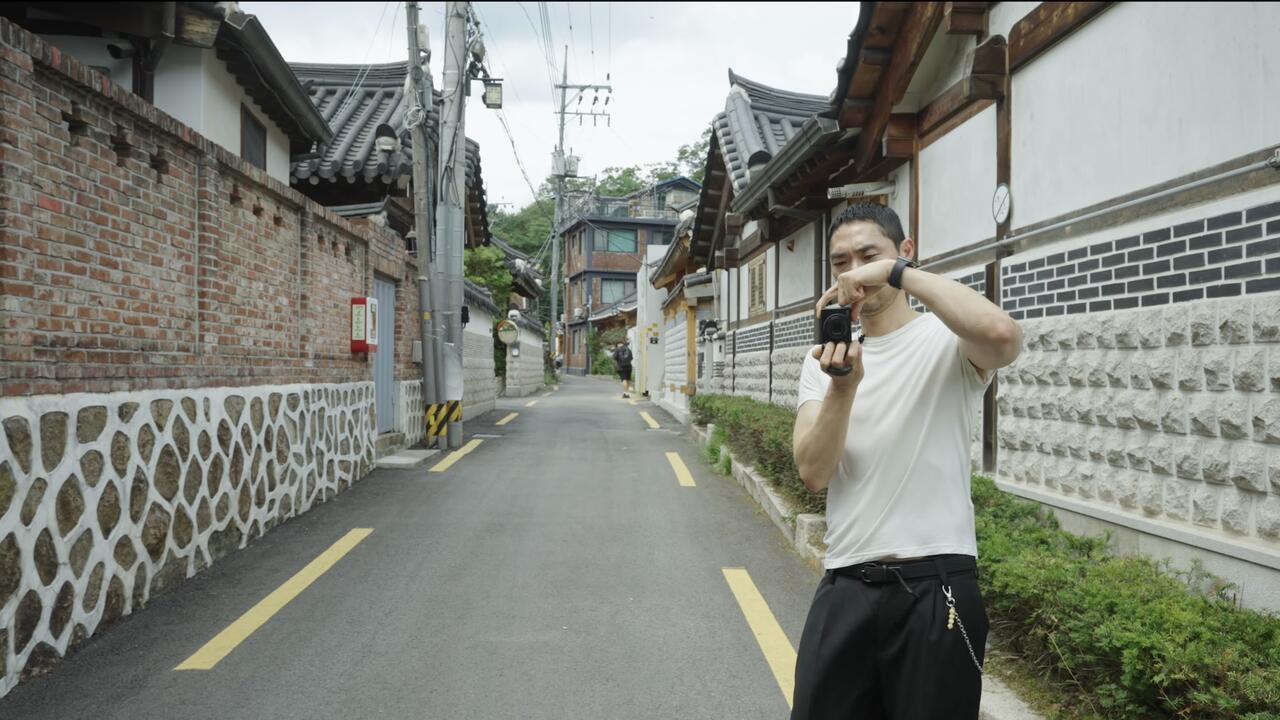
Main Image: Soyoung Lee. Photo: Jiuk Kim

.jpg?VersionId=wFDp5K3WVfb.Dv.tr0eUQ2kmYPfRI5_s&itok=XPHdkN8B)