-ethna-rose-o%27regan-thumb.jpg?VersionId=kL7ucmByjlyVoHLq_.RmW8zdpMTLRs2Y&itok=pX-0wvWR)




Sarah Rose Embraces the Nocturnal
At Tramway, Glasgow, the artist asks what bats and moths can teach us about sustainable living
At Tramway, Glasgow, the artist asks what bats and moths can teach us about sustainable living
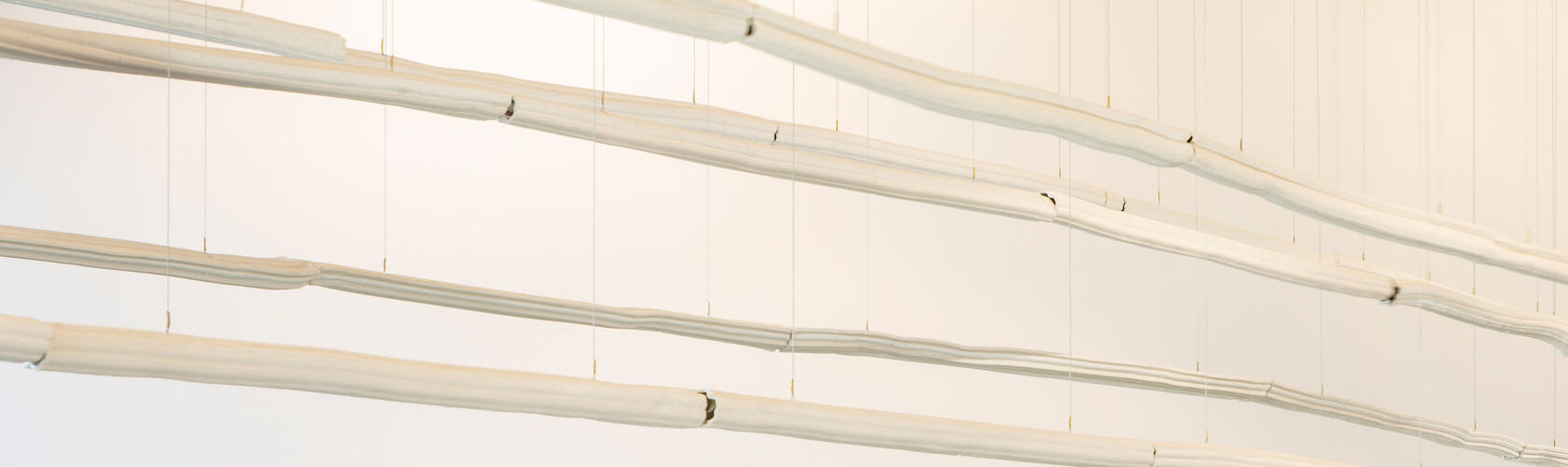
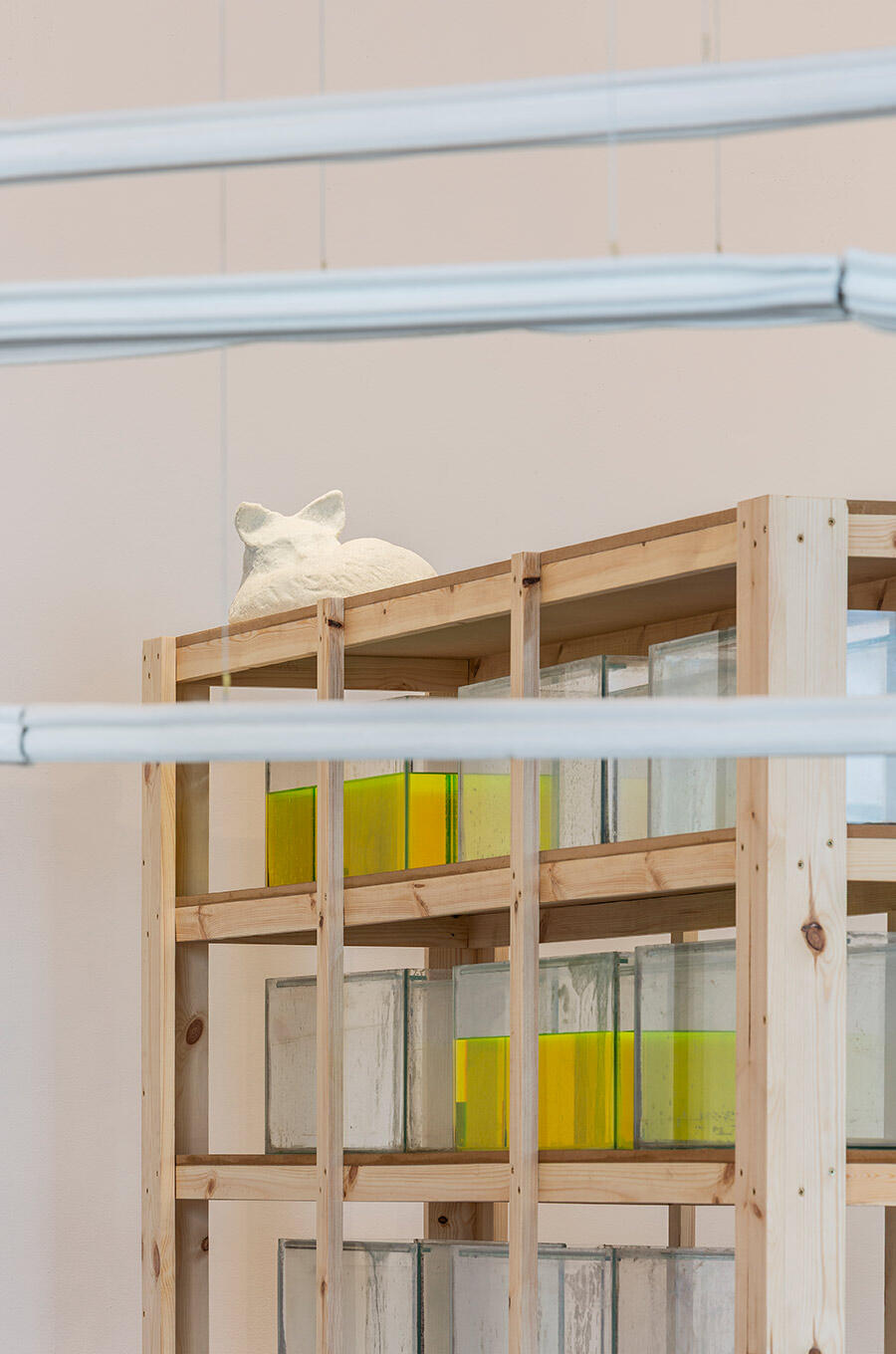
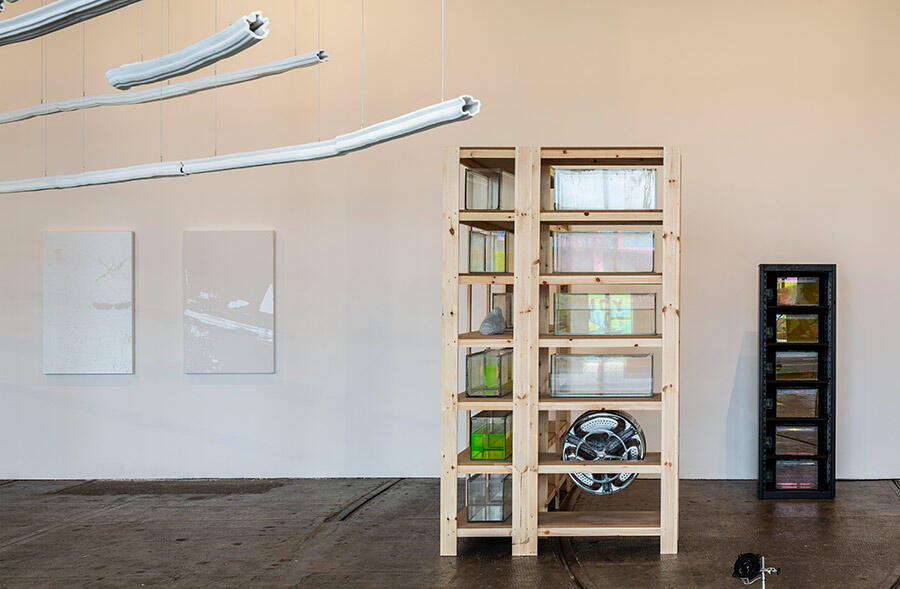
A spell of intense, oppressive heat descended on Glasgow during the week I visited Sarah Rose’s exhibition, ‘Torpor’, at the city’s Tramway. The weather served as a fitting backdrop to Rose’s exhibition, which is named after the state of dormancy or slowed activity entered into by animals during periods of high temperature or resource scarcity. This sprawling installation of nocturnal sounds and prototype animal environments revolves around ideas of symbiotic, care-focused relationships, inviting visitors to slow down and shift away from the constant desire for productivity.
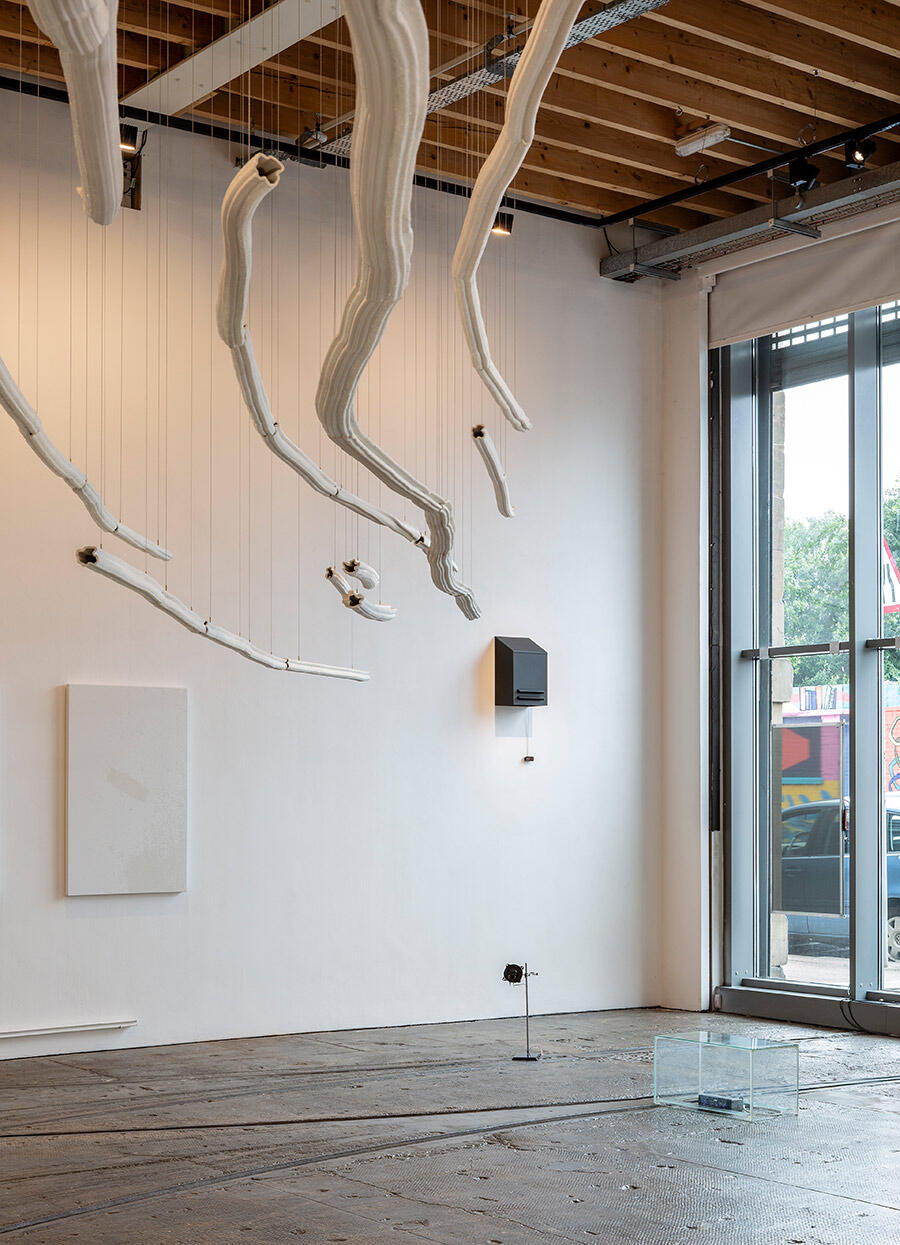
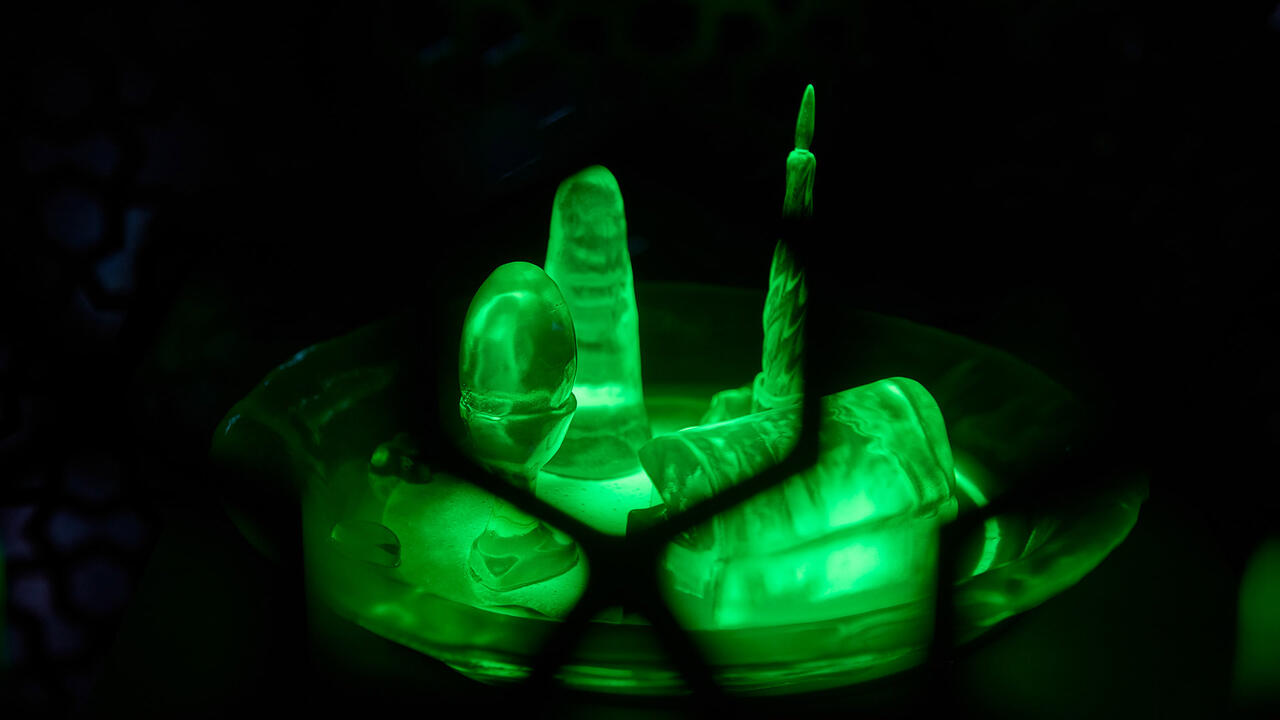
Concerned with what is left over from our daily lives, Rose works with found materials, retaining their previous histories while using them to shape new, collective narratives. In Roadside Flowers (2025), crushed industrial glass has been refired and extruded into lengths of night-blooming flowers. Suspended just above head height, these drawn-out blossoms wait – like frozen speed lines – to entice nocturnal pollinators. In ‘Ignitions’ (2024), the same crushed glass has been compacted onto white canvases to recreate photographic images of moths, preserving and making visible what is usually unseen by a diurnal audience. These works bring to mind the minimalist paintings of the 1960s, and in particular the series ‘White Light’ by Mary Corse (1968–ongoing), which comprises works coated in the glass microspheres used in street signs and cat’s eyes to reflect the beams from car headlamps. Rose’s canvases are similarly dazzling and, as I move to see how the light catches the glass, I feel like a moth euphorically jiving around a light bulb.
A work by another artist has also been recycled for this exhibition. In Daylight Drive (2025), Rose uses a sound system powered by photovoltaic solar panels that was previously part of Hannan Jones’s Edinburgh Art Festival commission, Surface, Bounce and Cycles (2022). In ‘Torpor’, it is used to play sounds from nocturnal envirmoments, including bat calls, which were recorded by Rose in the area surrounding Tramway. Rather than intruding on the animals’ environments, Rose made non-invasive recordings of the sounds that can be heard by simply standing and listening.
Indeed, the whole exhibition revolves around similar states of passivity – not a compliant or apolitical passivity, but one that proposes more conscientious methods of relating to the environment that surrounds us. Lurking in the corner of the gallery space is Night Air (2025), a giant aluminium revolving doorframe – a device initially designed to prevent building heat loss caused by the frequent opening of standard doors. Devoid of glass, however, in Rose’s rendering you can walk right through the frame – a sly upending of the object’s intent. Outside, in the gardens behind Tramway, Rose has placed what looks like an abandoned air-conditioning unit. It is, in fact, a maternity bat box, positioned to encourage bats to the area. In the UK, it is illegal to move an occupied bat roost and so bat boxes are often put in old buildings by eco-activists to protect the property from demolition or gentrification. The bats rule the roost.
Despite a giant stage lamp dazzling me as I left the exhibition, I exited feeling rested. Within its proposed alternative energy systems, ‘Torpor’ champions a deep engagement with the parasympathetic nervous system – which facilitates the periods of resting and digesting essential to mammals. Later, scrolling through Instagram while lying in a shady corner of Queen’s Park, I landed on a video of a cream bow tie transforming into a moth before taking flight. Perhaps the heat was playing tricks on me, but this strange video made me think of Rose’s moths and bats – their uncontrollability, and how rarely we see these animals in their natural habitats. Rose gets as close as she can, with works that gesture towards these animals’ presence – while also reminding us of their absence.
Sarah Rose’s ‘Torpor’ is on view at Tramway, Glasgow, until 7 September
Main image: Sarah Rose, ‘Torpor’, 2025, exhibition view. Courtesy: the artist and Tramway, Glasgow; photograph: Keith Hunter