-ethna-rose-o%27regan-thumbb507.jpg?VersionId=kL7ucmByjlyVoHLq_.RmW8zdpMTLRs2Y&itok=pX-0wvWR)



Masaya Chiba Wrestles with Painting’s Relevance
At ShugoArts, Tokyo, the artist combines nostalgic still lifes with assorted produce, cheap liquor and whistled Chopin
At ShugoArts, Tokyo, the artist combines nostalgic still lifes with assorted produce, cheap liquor and whistled Chopin
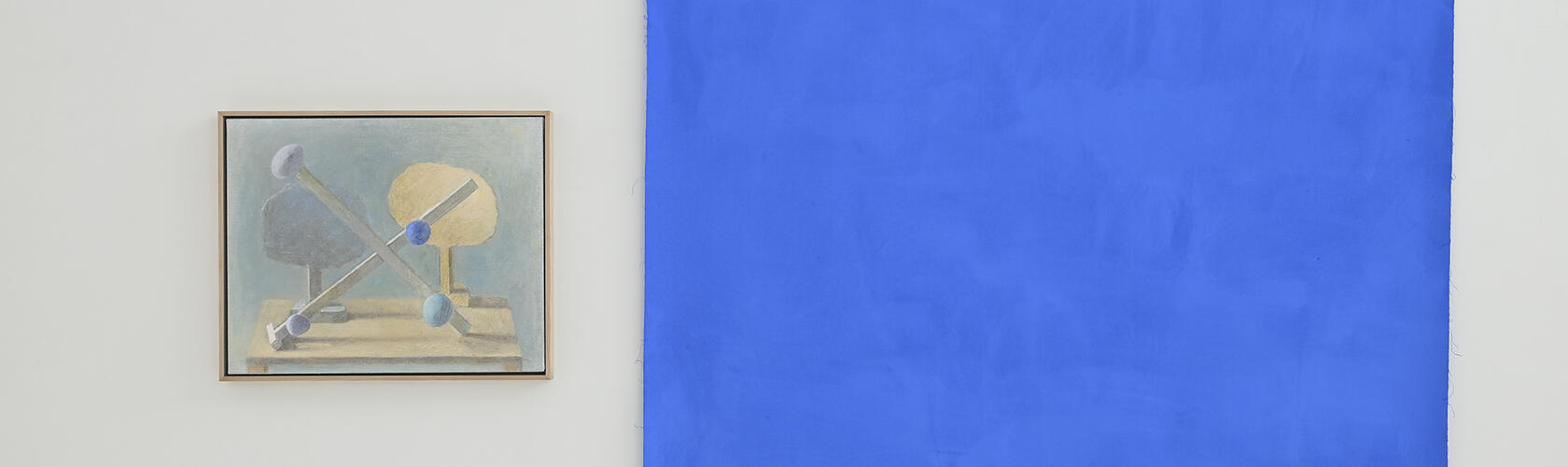
I mean this in the best sense possible: Masaya Chiba is an eggheaded painter whose works are arch. For example, in ‘Sideward Exhibition’, his 2023 show at ShugoArts, the artist ‘rotated’ the gallery space 90 degrees by hanging his paintings on the ceiling, wall and floor. His current exhibition at the same gallery, ‘Painting and iPS-derived cardiac muscle sheet’, hinges on nine small, enigmatic and deftly executed still life paintings combined with sundry objects, text and sound.
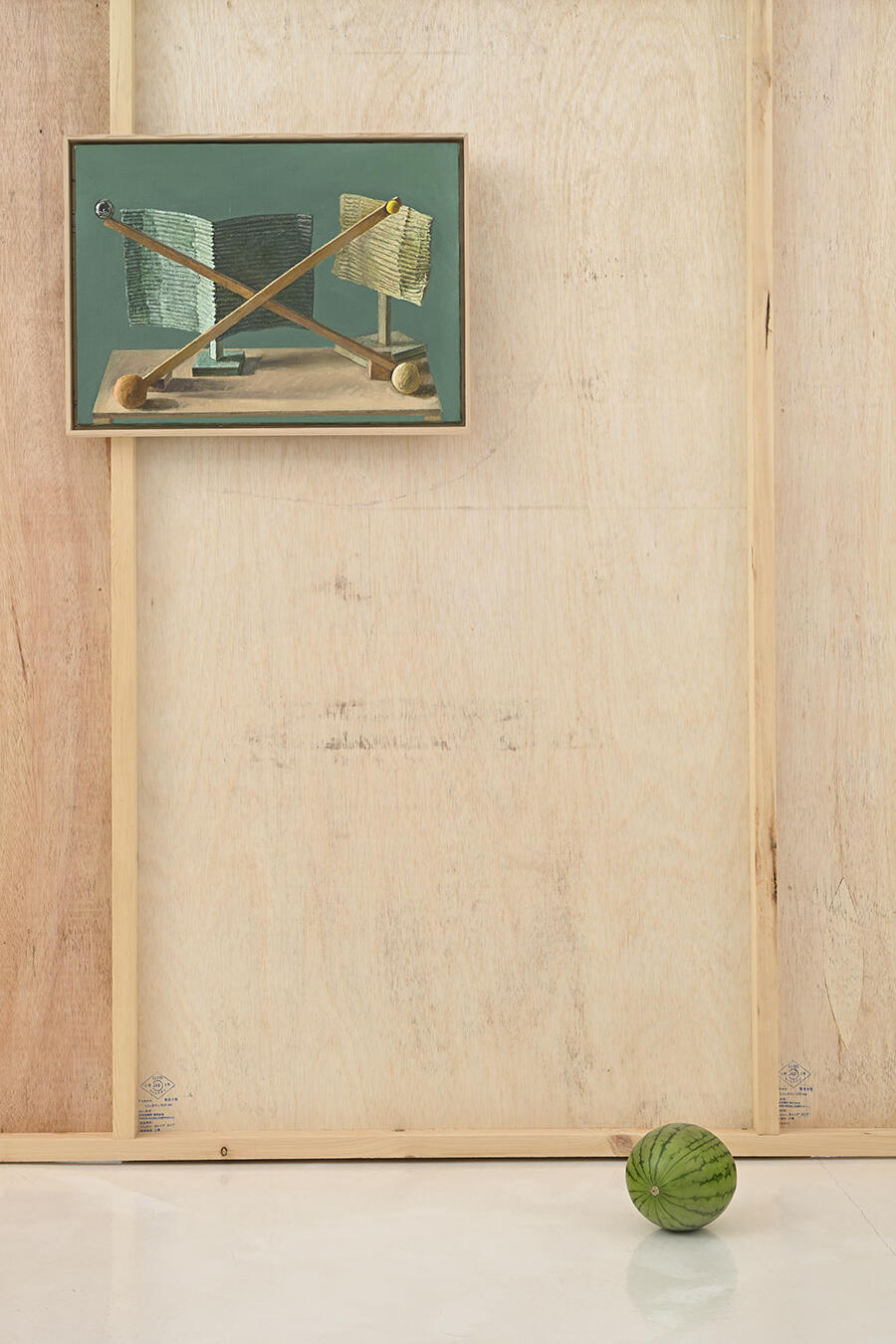
The paintings revisit surrealism and pop’s tactic of ‘deliberately us[ing] academic means to illustrate unconventional things’, as Clement Greenberg put it in the 1972 documentary Painters Painting. Approximating the muted palette employed by Italian still life master Giorgio Morandi, each canvas depicts a shallow space in which sculptural objects rest atop a simple wooden platform, echoing the plywood walls on which some of the works hang.
The objects portrayed are mostly abstract; some resemble trees, while one mimics a spade. In each case, viewers’ access to the objects is interrupted – and the painting flattened – by a recurring form in the foreground: a painted ‘X’ composed of two sticks with spheres at their ends, and sometimes at their midpoints. As a result, the paintings look oddly like schemata, conjuring up, for example, psychoanalyst Jacques Lacan’s intersecting triangles that show the subject turned into a picture by the gaze, or the ‘eyes’ of a golden rectangle. Rendered to anachronistic effect, these colours – ochre, grey, pistachio – feel nostalgic without referencing memory, functioning as simulacra.
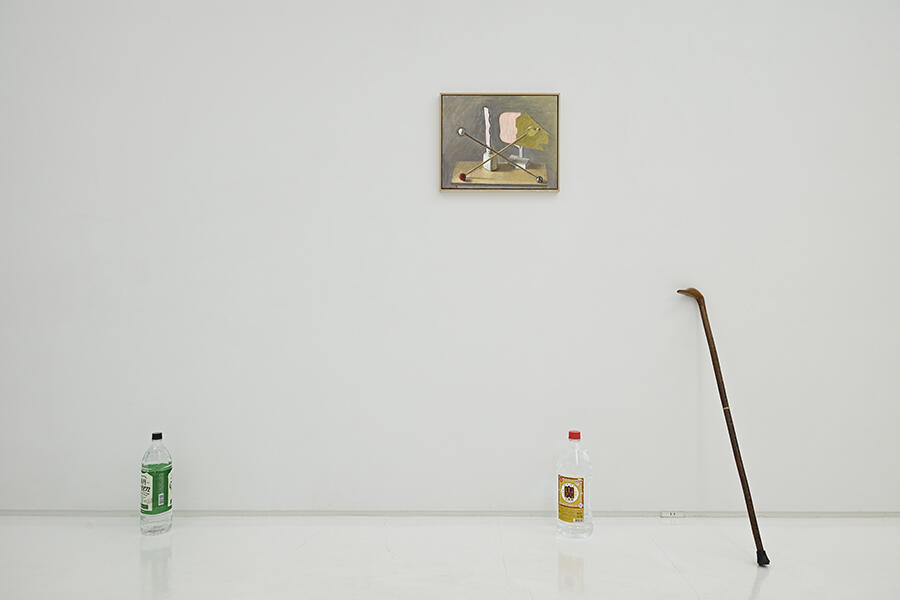
By coupling these pictures with ‘real’ objects like vegetables, a cane and bottles of cheap alcohol, the painter grapples with his medium’s liminal position between representation and reality. Chiba is stylistically playful here. The nine paintings are realistically but expressively rendered with rough brush marks, the canvas grain visible through the oil paint. They are punctuated by three smaller, trompe l’oeil paintings resembling moulded plaster (Facial expression #1, #2 and #3, all works 2025) and loose sketches like Still Life Arranged Like a Family Tree #2 (Drawing with a ?), which evokes the anamorphic skull in Hans Holbein the Younger’s The Ambassadors (1533), a painting that also layers different registers of visuality.
Chiba imbues these referential entanglements with a bit of romanticism, pairing one painting with a whistled rendition of Frédéric Chopin’s ‘Berceuse’ (1844), periodically emitted from a speaker (Painting and Whistled Notes, Chopin’s Lullaby [Dusk over a Withered Field]), and another with an apparently sincere, confessional essay on loneliness and fatherhood, dedicated to his young son’s cuteness (Painting and Essay [The Loneliness of the Universe]). These additions, like the three-dimensional objects, attempt to bring still life to life. Akin to the memento mori-style skulls that feature in several works, the lullaby and text gesture, relatably, to time’s passage.
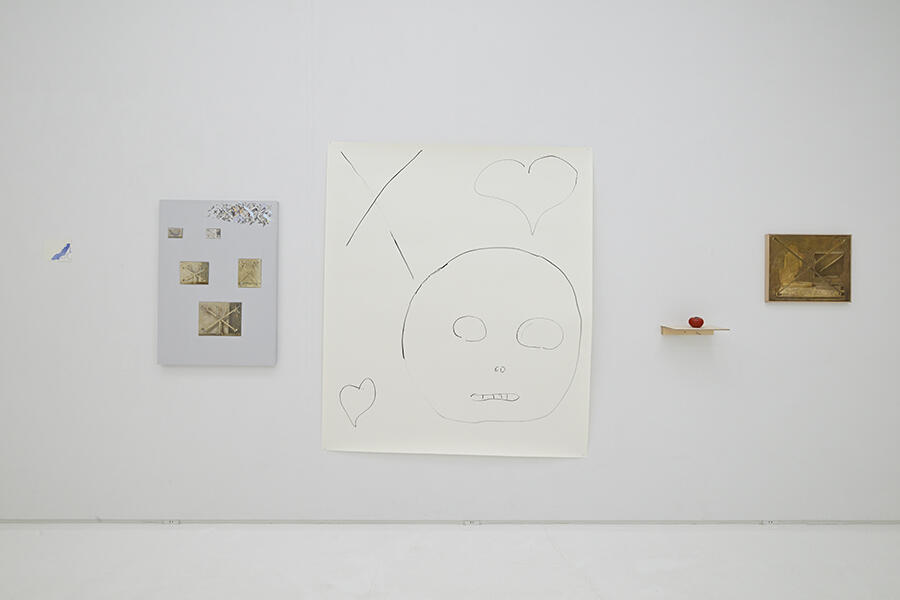
Overall, however, the exhibition feels a bit overloaded and academic, holding the viewer at arm’s length. Chiba is one of the most serious youngish Japanese painters exhibiting today. It’s great to see him doing less, toning down his works in both colour and imagery. Yet the main themes with which his work engages – the arbitrary nature of the sign, and the relationship between representational systems and reality – have been tackled by heavy hitters in the historical European avant-garde (think of Georges Braque or René Magritte). Chiba’s focuses and references suggest uncertainty about painting’s contemporary relevance. They also evoke the impossibility, for the Japanese painter, of circumventing the Western language of painting. Though this exhibition fails to reinvigorate these conversations, Chiba’s work is unusually rigorous; his evolving, disorienting practice heightens anticipation for his next move.
Masaya Chiba’s ‘Painting and iPS-derived cardiac muscle sheet’ is on view at ShugoArts, Tokyo until 2 August
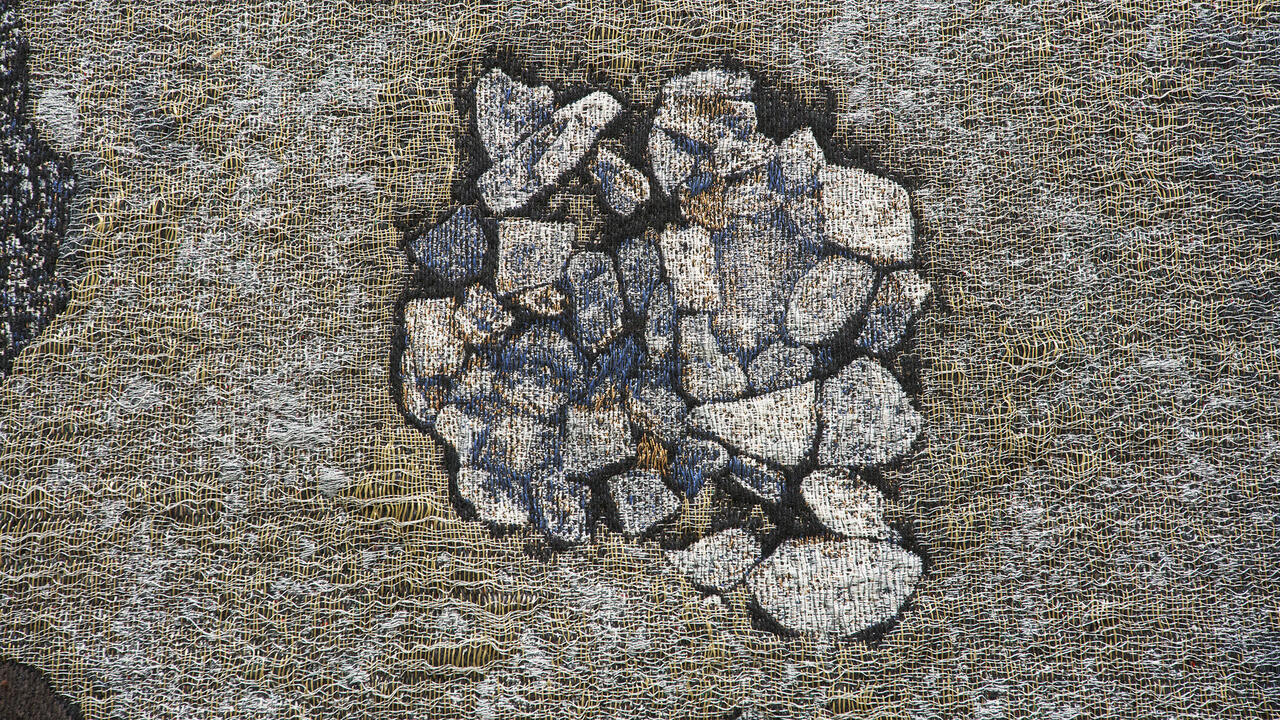
Main image: Masaya Chiba, Painting and One-Meter Square of Blue (Mist, the Nuance of the Morning) (detail), 2025, oil on canvas, panel, acrylic on fabric, painting: 35 × 43 cm, fabric: 106 × 106 cm, exhibition view. Courtesy: © Masaya Chiba, courtesy ShugoArts; photograph: Shigeo Muto