-ethna-rose-o%27regan-thumbb507.jpg?VersionId=kL7ucmByjlyVoHLq_.RmW8zdpMTLRs2Y&itok=pX-0wvWR)



Diamond Stingily Plays with the Mundane
At Cabinet, London, the artist’s minimal installation recreates a blurry photograph of a bus stop
At Cabinet, London, the artist’s minimal installation recreates a blurry photograph of a bus stop
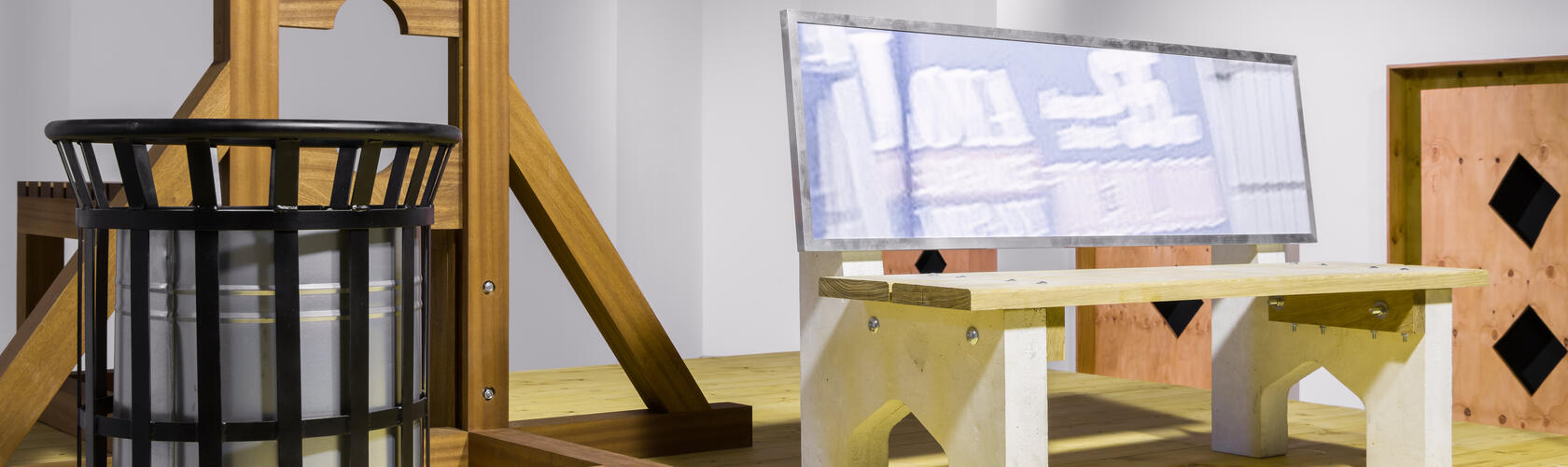
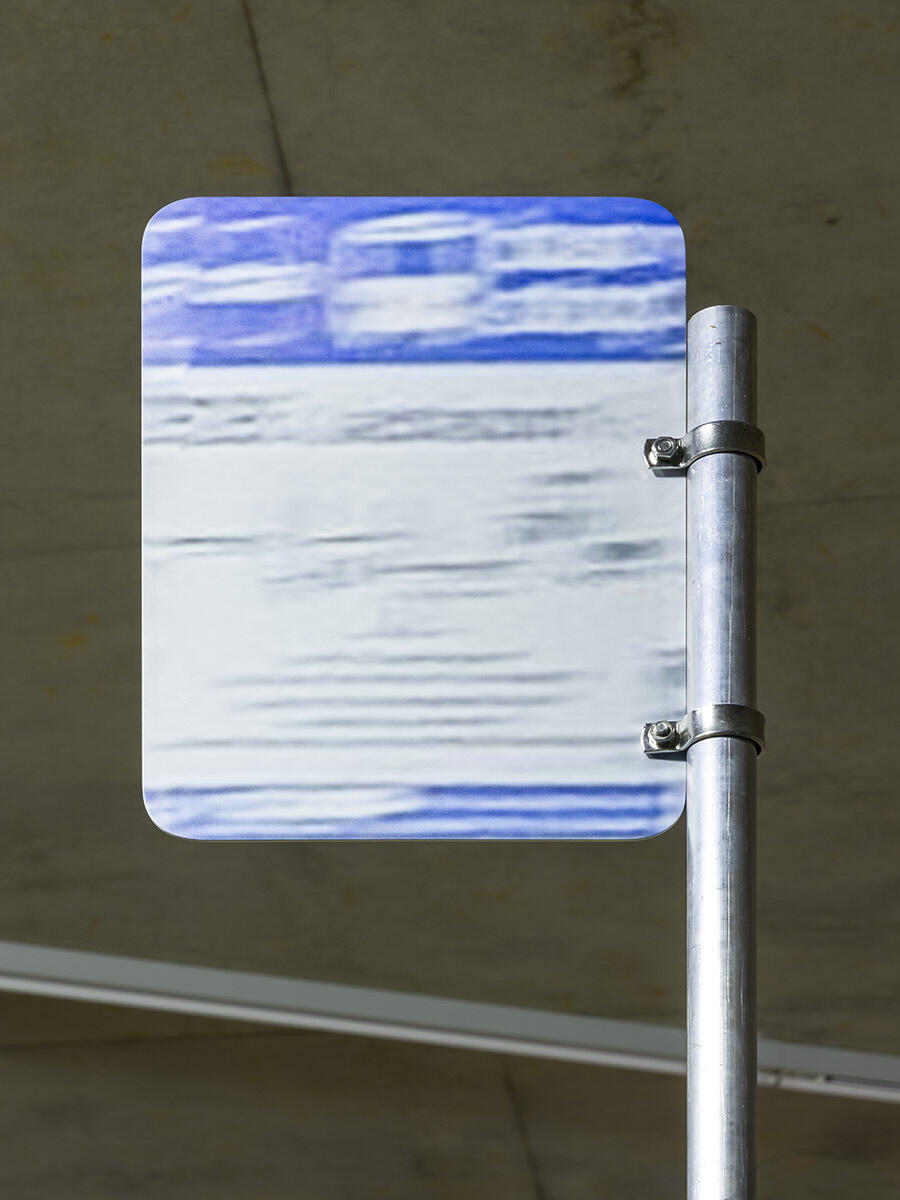
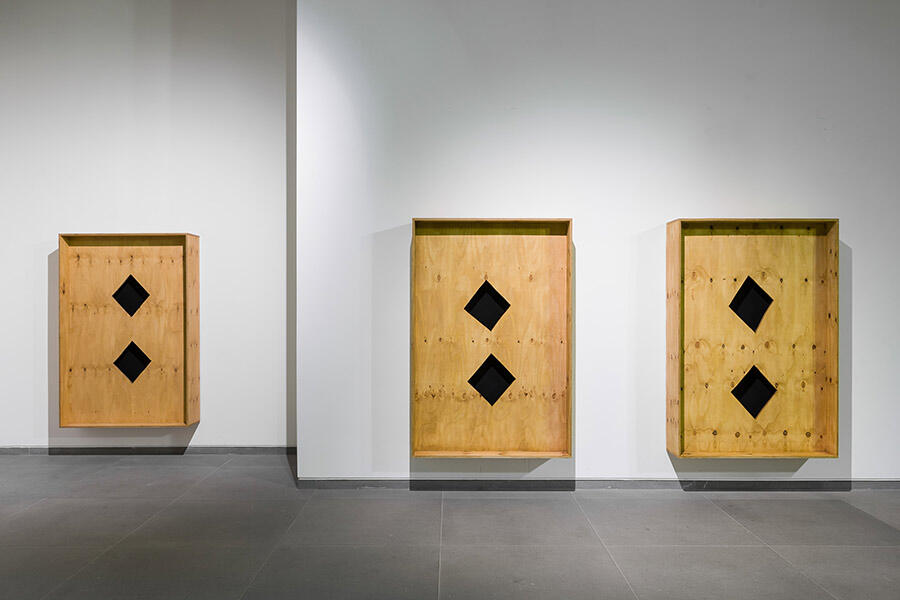
Setting: a contemporary art gallery, daytime. A bench, a bus stop sign and a waste bin sit on a floodlit wooden stage. A guillotine looms over them. Three open-fronted plywood boxes, each perforated with two diamond-shaped holes, hang on the wall; a sheet of wood with similar apertures covers a tall, narrow window. Diamond Stingily’s ‘May 29’, at London’s Cabinet Gallery, is titled after the date it opened – a banal gesture in keeping with the aesthetic of the installation, which features versions of objects encountered by the artist in her ordinary surroundings. An image printed on the front of the gallery handout shows the exhibition’s central referent: a bus stop photographed from inside a moving vehicle, the sign and bench advertisement made queasily indistinct by movement. These warped images have been cropped and faithfully reproduced by Stingily: in the gallery, the sign’s text is an illegible, motion-blurred smear. Also depicted in this source photograph is a building with boarded-up windows – a familiar sign of economic decline, both managed and unforeseen.
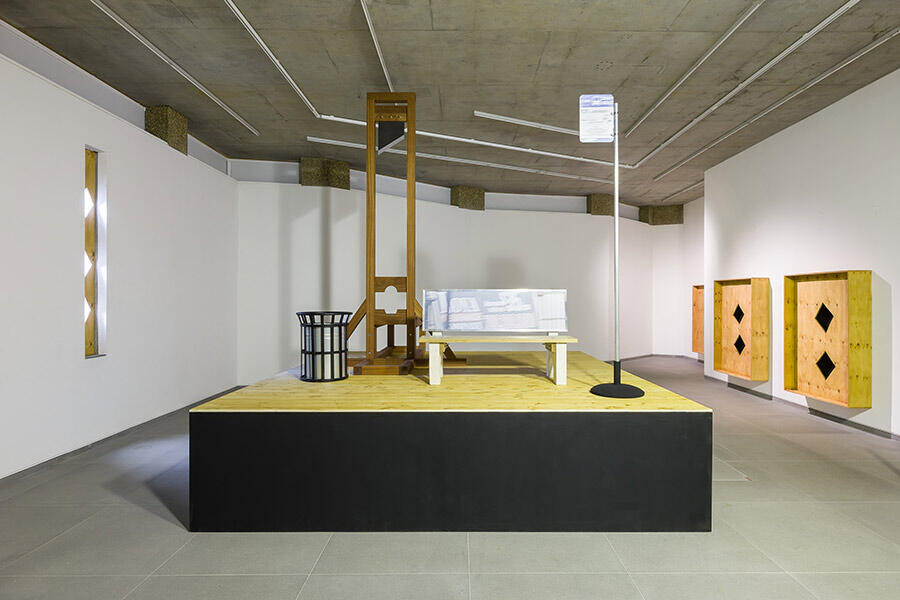
According to the brief exhibition text, the objects represented by Stingily’s sculptures possess a quality the artist describes as ‘supermundane’. The bus stop pieces are fabricated to a high level of mimetic accuracy, using materials including powder-coated steel, cast concrete and digital prints. Each piece has a machinic consistency and smoothness, which lends the works the alienating quality often found in urban areas that have been generated by committee rather than community. The plywood boxes, on the other hand, feel more welcoming: with slightly wonky screws, they are visibly hand-assembled; their diamonds are irregular; and the wood is full of natural variations in tone and grain. Cut through with a shape that is also the artist’s name, these sculptural self-portraits were inspired by another photograph Stingily took of a derelict building, its windows covered by diamond-punctured sheets of ply – a whimsical solution to the stark predicament of lacking windows and privacy.
The guillotine that haunts this otherwise prosaic scene is made from smooth, expensive walnut. A historical signifier of rebellion, terror and regime change, the guillotine was a mode of execution wielded against all social classes – most famously as the tool of the leaders of the French Revolution (1789–99), many of whom were themselves ultimately beheaded by it. However, in common with many theatrical props, the functionality of Stingily’s guillotine is illusory: its blade runs along the same track as the pillory, so if it were dropped it would hit the top of the wooden collar, not slice through a neck.
The tension between the drama of the guillotine and the mundanity of the bus stop pulls open a space in which fear, frustration or rage might be played out, whether in the imagination of the viewer or literally, on the stage Stingily offers us. Waiting for a bus can yield deadening disappointment, boredom and rumination, but a bus stop can also be a waypoint on a journey of social change – as it was for Claudette Colvin, Rosa Parks and other women who refused to give up their seats to white passengers on segregated buses in 1950s America, as well as for bus drivers protesting the ‘colour bar’ during the UK’s 1963 Bristol Bus Boycott. If the stage in ‘May 29’ is set for action, the performance is as yet unspecified. While Stingily’s sculptures appear under the guise of the familiar and the everyday, they remain radically open to interpretation, inviting connections with any number of extraordinary personal, social and historical quandaries. It is up to each person to risk finding out what that means – and what action Stingily’s uncanny mise-en-scène might call for.
Diamond Stingily’s ‘May 29’ is on view at Cabinet, London, until 6 September
Main image: Diamond Stingily, ‘May 29’, 2025, exhibition view. Courtesy: the artist and Cabinet, London; photograph: Mark Blower